Side Hustles for Women: Five Realistic Routes to Turn a Creative Skill Into Income
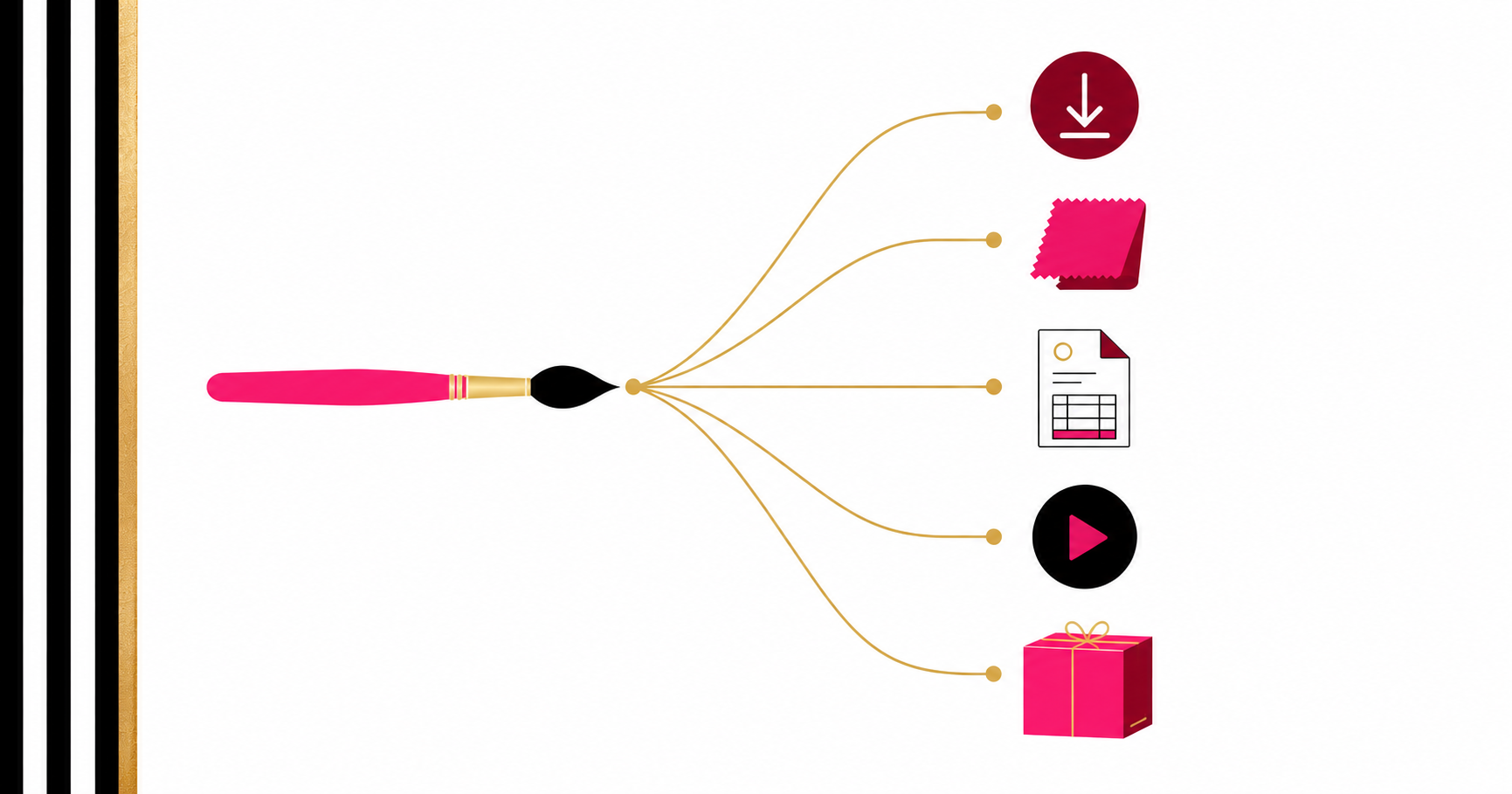
You have probably saved more than 400 side hustle pins. You have started none of them.
That is not a criticism. It is the most common pattern I see in creative women who want to turn a skill into income. You do not have an idea problem. You have forty browser tabs open, a folder full of inspiration, and no decision.
Most lists of side hustles for women make that worse. They hand you thirty more options and call it help. More options means more circling.
This is not that list. It is five routes that genuinely turn a creative skill into money, with the honest reality of each one: how much time it takes, what it actually pays, who it suits, and the specific thing that stops most women in the first ninety days.
I built three creative businesses alongside a senior full-time corporate role, as a single mum to two young children. Not in ideal conditions. In the cracks, under pressure, around everything else. So this is written from the inside, not from a research paper.
Why most "side hustles for women" lists keep you circling
Here is the uncomfortable bit. The reason you have not started is almost never that you have not found the right idea.
You have found ten right ideas. You keep collecting more because collecting feels like progress and starting feels like risk. A new list of side jobs for women gives you the small hit of "maybe this one" without the discomfort of committing to any of them.
A side hustle and real income are separated by two things, and neither of them is the idea. The first is a decision. The second is consistency. You pick one route, and you work it for long enough to get real feedback. That is the whole game.
I spent twenty-five years in sales operations. My job was to find out why a team was not hitting its numbers, fix the broken thing, and make sure it stayed fixed. The broken thing was rarely a lack of ideas. It was almost always a lack of focus and follow-through. The same is true for a creative business built on the side.
So instead of thirty options, here are five. And instead of selling you the dream, I will tell you the truth about each one against four measures:
Time investment. What it realistically takes each week to make it move.
Income range. What it pays early, and what it can build to. No fantasy numbers.
Skill match. The kind of creative skill it suits best.
The first-ninety-days killer. The specific reason most women quit this route before it pays.
Read all five. Then pick one. Not three. One.
The five routes that actually turn a creative skill into money
Every route below can turn a hobby into income. None of them works without a decision and consistent effort behind it. They differ in how fast they pay, how much they pay, and what kind of work you actually do day to day.
There is no best one. There is only the best one for your skill, your hours, and your appetite for risk. Use the four measures to find yours.
Route 1 — Sell digital products
This is the most popular entry point for a reason. You make something once and sell it many times. Printables, planners, templates, digital art, wedding stationery, social media templates, Procreate brushes. You list it on Etsy or your own shop, and it sells while you sleep.
Who it fits. Designers, illustrators, and makers who can produce a useful or beautiful file. If you can make something a buyer wants to download and use, you can sell it.
Time investment. Heavy at the start, lighter later. The product takes a weekend or two to build properly. The ongoing work is traffic, not production. That is the part people skip.
Income range. Each sale is small, often three to fifteen pounds. Early months are frequently quiet, fifty to a hundred pounds if that. A catalogue of products with a real traffic source behind it can build to several hundred or more than a thousand a month over time. The maths only works at volume.
The first-ninety-days killer. Listing three products and waiting. A digital product with no traffic engine is a file nobody sees. The women who make this work treat traffic, usually Pinterest, as the actual job and the product as the thing it points at. If you build the shop and skip the traffic, you have built a beautiful room with no door.
Route 2 — License your designs and use print-on-demand
If you make patterns or illustrations, your work can earn on products you never have to make or ship. Print-on-demand sites like Spoonflower, Society6, and Redbubble put your designs on fabric, mugs, and prints, and pay you a cut of each sale. True art licensing, where a brand pays to use your design on their products, sits at the other end of the same spectrum.
Who it fits. Surface pattern designers and illustrators with a recognisable style and a body of work.
Time investment. Uploading to print-on-demand is quick. Building a portfolio strong enough to license is slow, and the outreach to land a licensing deal is a real job in itself.
Income range. Print-on-demand royalties are small per sale, often pennies to a pound or two, so this is a volume play. Licensing pays far more per deal, frequently hundreds to thousands of pounds, but deals are slow to land and depend on a serious portfolio and consistent outreach.
The first-ninety-days killer. Uploading fifty designs to a print-on-demand site and calling it a business. Volume without a keyword strategy is invisible. On the licensing side, the killer is waiting to be discovered instead of building the portfolio and making the approaches. Nobody is going to find your work and offer you a deal while it sits in a folder.
Route 3 — Freelance and take commissions
This is the fastest route to actual cash. You sell your skill directly to a client who needs it. Logo design, custom illustration, pattern work for a small brand, social media graphics, hand-lettering. One client, one brief, one invoice.
Who it fits. Anyone with a skill a business will pay for and the willingness to talk to strangers about money.
Time investment. Time for money, directly. The work pays well per hour, but it stops paying the moment you stop working. The hidden cost is the pipeline. Finding the next client takes time the project does not pay for.
Income range. The strongest near-term earner on this list. Project fees commonly run from a hundred and fifty to several hundred pounds and up, depending on your skill and who you are selling to. Day rates climb from there as you build a reputation.
The first-ninety-days killer. Two things, and they travel together. Waiting to be found instead of pitching, and underpricing out of fear. You do not need a perfect portfolio to start. You need to pick one type of client, write one honest message, and send it today. Ready is built by pitching badly a few times and then less badly.
Route 4 — Teach what you already know
If you have a skill, someone one step behind you will pay to learn it. A workshop, a short course, a paid template walkthrough, a small digital guide. You are not selling the product anymore. You are selling the shortcut.
Who it fits. Makers and designers who are good at explaining how they do the thing, and who have, or are willing to build, a small audience.
Time investment. Building the teaching is a real project. The bigger ongoing cost is the audience. A course with nobody to sell it to is a long weekend you will not get back.
Income range. Higher ticket than digital products, often twenty-seven to a couple of hundred pounds per sale, sometimes more for live or cohort formats. Income tracks the size and warmth of your email list far more than the quality of the course.
The first-ninety-days killer. Building the whole thing before validating that anyone wants it. The pattern is always the same. Months disappear into making the perfect course, and launch day arrives with an audience of nobody. Sell it first, in rough form, to the people you already have. Build it properly once you know it sells.
Route 5 — A small physical product line
For some makers, the work wants to be physical. Prints, cards, ceramics, textiles, small homeware. You design it, produce it in small batches, and sell it through a market stall, your own shop, or a platform like Etsy.
Who it fits. Makers whose value is in the object itself, and who enjoy the craft and the logistics of selling something real.
Time investment. The highest of the five. You are designing, producing, packing, shipping, and handling stock. Every sale has hands-on work attached to it.
Income range. Revenue per unit can look healthy, but margins are thinner than they appear once materials, packaging, postage, and platform fees come out. This route rewards careful numbers more than any other on the list.
The first-ninety-days killer. Over-investing in stock before you have tested demand. The exciting version is ordering five hundred units of your first design. The smart version is making a small batch, selling it, and letting real orders tell you what to make more of. Revenue is feedback. Let it decide for you.
How to choose one route this week (and ignore the rest)
You have read five routes. Your instinct now is to keep two or three open, just in case. That instinct is the spiral. Resist it.
Pick the one route where your skill match is strongest and the time investment fits the hours you actually have. Not the one with the highest income range. The one you will still be working in ninety days, because consistency is what turns any of these from a side hustle into real income.
Then narrow it further. For the next four weeks, choose one focus inside that route. One product to launch. One type of client to pitch. One small batch to test. Write it at the top of the page and let everything else wait.
This is the exact thing the Anti-Spiral Monthly Planner is built for. It is the one-page template I use in my own business every month. One focus. Ten numbers. An honest look at what you avoided and why. Fill in just the top box this weekend and you will see the next four weeks more clearly than you have in months. You can download the Monthly Planner here, free.
If you are not even sure which pattern keeps stopping you, start there instead. The two-minute Anti-Spiral Audit names the exact way you stall and the one move that breaks it.
The one thing to do this week
Stop saving side hustles for women and start running one. Pick the single route that fits your skill and your hours, choose one focus inside it, and give it ninety days of consistent, honest effort.
That is the whole difference between a folder of pins and a business that pays you. Not the idea. The decision, and the follow-through.
By this time next month, something will have moved. Make sure it is the right thing.
Stop circling. Start building.
Jodie