How to Start a Creative Business When You Already Have a Job, Kids, and No Spare Hours
You have meant to start for about two years now.
You have the skill. You also have a full-time job, children who need you, and a life that is already full before you add anything to it. So the creative business stays where it has always been. In your head, in a folder, in a someday that keeps moving.
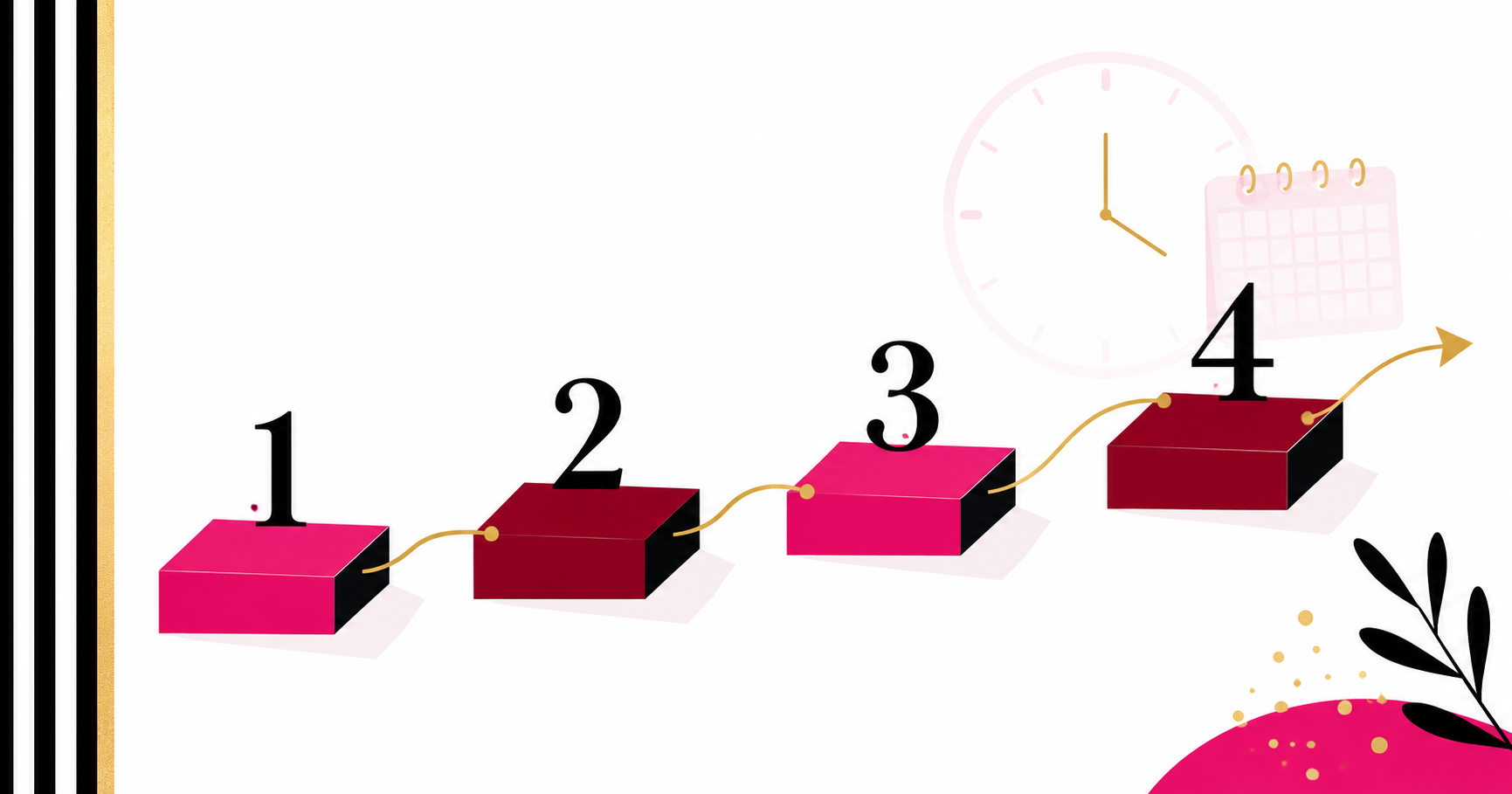
Here is the thing nobody tells you about how to start a creative business in that situation. It is not really a time problem. It is a structure problem wearing a time problem's coat. You do not need four free days a week. You need four good decisions, made in the right order.
I know this because I did it. I built The Colour Rebel, Colour Rebel Studio, and Anti-Spiral while holding a senior full-time role in a US software company, as a single mum to two young children. Not after quitting. Not in a clear quarter with childcare sorted. In the cracks, under pressure, around everything else. So this is not theory. It is the playbook I actually used.
Why "follow your passion" is useless when you have no spare time
Most advice on starting a creative business is written for someone you are not.
It assumes free hours, a financial runway, and the option to go all in. Follow your passion. Build the dream. Quit and figure it out. None of that survives contact with a job, a mortgage, and a school run.
When time is the binding constraint, starting a creative business stops being a motivation problem and becomes an operations problem. You are not short on passion. You are short on hours, and you are spending the few you have on the wrong things, in the wrong order.
The fix is not more time. It is fewer, better decisions. Four of them, made deliberately and in sequence. Get the order wrong and the whole thing stalls, which is exactly what has been happening.
Decision 1 — Decide the one thing you are selling
The first decision is the one you have been avoiding, because it means closing doors.
You probably have several ways you could earn from your skill. Sell digital products. License your designs. Take commissions. Teach. When time is scarce, holding all of those open is the same as doing none of them. Every undecided option is a tab left running in the back of your mind.
Pick one route. The narrower the better. Not the one with the biggest theoretical payday. The one that best fits your skill and the hours you actually have. If you want help weighing them, I have written a full breakdown of the realistic routes in side hustles for women and a deep dive on one of them in how to license surface pattern designs.
What kills people here: keeping options open because choosing feels final. It is not final. It is just first. You can change route in six months with real data behind the decision. You cannot get anywhere while you are standing at the junction.
Decision 2 — Decide when you work, and make it small and fixed
The second decision is about time, and it is the opposite of what you expect.
You have been waiting for the big free weekend. The clear evening. The week off when you will finally make real progress. It never comes, and when a version of it does, you are too tired to use it. Building a business in the cracks does not work in heroic bursts. It works in small, fixed, repeated blocks.
Thirty to forty-five minutes at the same time, most days, beats a frantic five-hour session once a month. Not because the hours add up to more, though they do. Because consistency is what compounds, and because a small daily block is something a full life can actually hold.
Protect it like an appointment. Same time, same place, phone elsewhere. The point is not to find more time. It is to decide which small slot is the business's, and then defend it.
What kills people here: waiting for ideal conditions. The conditions are not the obstacle. The approach is. Build in the time you have, not the time you wish you had.
Decision 3 — Decide to do the money work first
The third decision is where most creative businesses quietly fail, and it is the most uncomfortable one.
In your small daily block, you will feel a strong pull toward the safe work. Tweaking the logo. Rebuilding the website. Reorganising the shop. It feels like progress because it is productive and it risks nothing. Meanwhile the work that actually makes money sits untouched, because it carries the risk of a real answer.
The revenue work is pricing your offer, pitching to a buyer, promoting what you make, and asking for the sale. It is the part you avoid. So do it first, while the block is fresh and before the comfortable tasks fill it.
This is the core of how I run everything. The business tasks you are avoiding are not obstacles to your creative work. They are the fastest route back to it. Money buys you the time and the proof to keep making the thing you love.
What kills people here: dressing avoidance up as preparation. Endless getting-ready that never becomes doing. If a task has no real outcome attached, it is not the first thing. Put the scary, revenue-facing task at the top of the block.
Decision 4 — Decide to let revenue steer
The fourth decision turns a hobby that happens to charge money into an actual business.
You need to know whether the thing is working, and the only honest signal is the numbers. Not vanity numbers. A handful that matter: what you made, what sold, what people clicked, what you charged. Revenue is feedback. It is not a verdict on your worth. It tells you what is working, what is not, and where to put the next small block.
Most creative businesses never look, so they never learn. They run on hope and feeling, repeat what is comfortable, and wonder why nothing compounds. Decide instead to check the few numbers that matter at the end of each month, then cut what is not moving and do more of what is.
What kills people here: never opening the books, because the answer might be uncomfortable. The discomfort is the information. Without it you are funding a hobby and calling it a business.
Why the order matters
These are four decisions, not four options to pick from. They only work in sequence.
Decide what you are selling, or you have nothing to schedule. Decide when you work, or the offer never gets built. Do the money work first, or the time gets eaten by busywork. Let revenue steer, or you repeat the same month forever with no idea why it is not growing.
One thing, then a time, then the money work, then the measure. Made in that order, a creative business fits inside a full life. Made out of order, or not made at all, it stays exactly where it has been. In your head, in a folder, in someday.
Your move this week
You do not need a free month to start a creative business. You need to make the first decision and protect the first block.
So make Decision 1 this week. Pick the one route. Write it at the top of a page and let the other options wait. The Anti-Spiral Monthly Planner is built to hold exactly this: one focus, ten numbers, an honest look at what you avoided and why. Download the Monthly Planner here, free, and put your one decision at the top of it this weekend.
You have had the skill for years. What you have been missing is not time or talent. It is four decisions in the right order. Now you have them.
Not sure which pattern keeps stalling you? Take the Anti-Spiral Audit.
By this time next month, something will have moved. Make sure it is the right thing.
Stop circling. Start building.
Jodie